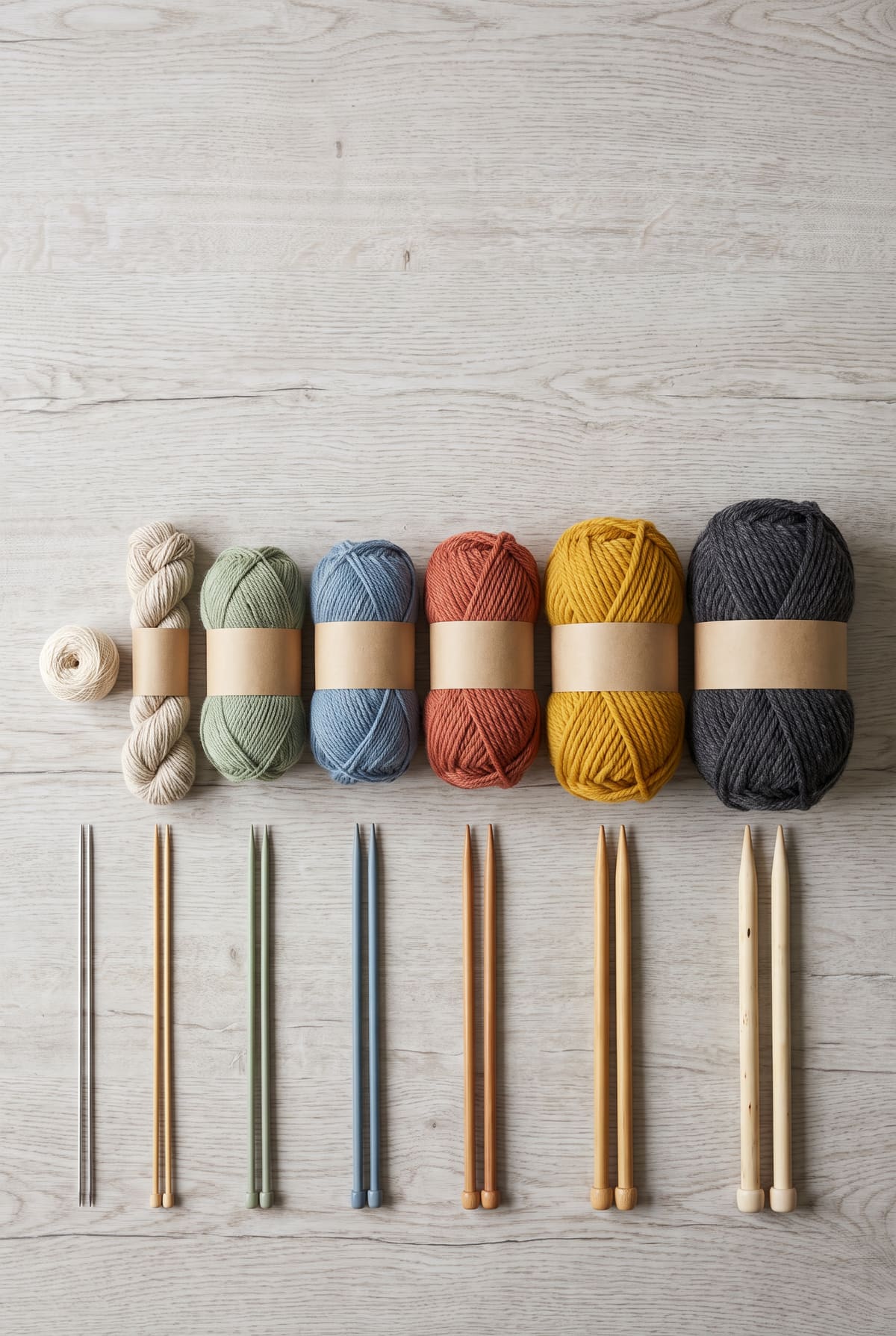
Yarn comes in eight standard weights, numbered 0 (lace) to 7 (jumbo). Medium weight 4, also called worsted, is a common choice for blankets and hats. The standard pairs it with a 4.5 to 5.5 mm needle or 5.5 to 6.5 mm hook.
Free to print for personal use. Last reviewed .
Standard yarn weights with typical knitting and crochet gauge and tool sizes
Weight
Also called
Knit gauge (sts per 4")
Needle
Crochet gauge (sc per 4")
Hook
Good for
0Lace
Fingering, 10-count crochet thread
33 to 40
1.5 to 2.25 mm (US 000 to 1)
32 to 42 (double crochet)
Steel 1.4 to 2.25 mm (Steel 6, 7, 8 or B-1)
Shawls, doilies, fine lace
1Super fine
Sock, fingering, baby
27 to 32
2.25 to 3.25 mm (US 1 to 3)
21 to 32
2.25 to 3.5 mm (B-1 to E-4)
Socks, light shawls, baby things
2Fine
Sport, baby
23 to 26
3.25 to 3.75 mm (US 3 to 5)
16 to 20
3.5 to 4.5 mm (E-4 to 7)
Light sweaters, baby clothes
3Light
DK, light worsted
21 to 24
3.75 to 4.5 mm (US 5 to 7)
12 to 17
4.5 to 5.5 mm (7 to I-9)
Garments, lighter blankets
4Medium
Worsted, afghan, aran
16 to 20
4.5 to 5.5 mm (US 7 to 9)
11 to 14
5.5 to 6.5 mm (I-9 to K-10½)
Blankets, hats, sweaters, toys
5Bulky
Chunky, craft, rug
12 to 15
5.5 to 8 mm (US 9 to 11)
8 to 11
6.5 to 9 mm (K-10½ to M-13)
Warm blankets, rugs, quick hats
6Super bulky
Super chunky, roving
7 to 11
8 to 12.75 mm (US 11 to 17)
7 to 9
9 to 15 mm (M-13 to Q)
Chunky throws, cowls, fast projects
7Jumbo
Jumbo, roving
6 or fewer
12.75 and larger mm (US 17 and larger)
6 or fewer
15 and larger mm (Q and larger)
Arm knitting, giant blankets
Source: the Craft Yarn Council's Standard Yarn Weight System (www.YarnStandards.com). Gauge is over 4 inches (10 cm) in stockinette for knitting and single crochet for crochet, except lace, which uses double crochet.
How to read the chart
Find the weight number on your yarn label, usually inside a small ball of yarn symbol, and read across. The gauge column tells you roughly how many stitches you'll get in 4 inches, and the tool columns suggest where to start with needles or hooks. If your label doesn't show a number, compare its suggested gauge and needle size with the chart to find the closest weight. To convert a hook between millimeters, US letters and UK numbers, use the crochet hook size chart; for needles, the knitting needle size chart.
Why yarn weight matters
Weight controls how big each stitch is. Two blankets with the same stitch count can come out very different sizes in different weights, and they'll use different amounts of yarn. That's why patterns name a weight and a gauge, and why our blanket yarn calculator asks for a swatch.
Names around the world
The same yarn can have different names depending on where you buy it. In the UK and Australia, "4 ply" is close to fingering or sport weight, "8 ply" is close to DK, and "10 ply" is close to worsted or aran. These are rough matches, so check the gauge on the label.
Wraps per inch and length per 100 grams
When a yarn has lost its label, two measurements help place it. Wraps per inch (WPI) is how many times the strand wraps around a pencil in one inch, with the wraps side by side. Length per 100 grams compares how much yarn you get for the same weight. Thicker yarns have fewer meters.
Wraps per inch and meters and yards per 100 grams for yarn weights 0 to 7
Weight
WPI (Craft Yarn Council)
Meters per 100 g (Wikipedia)
Yards per 100 g (converted)
0Lace
30 to 40+
600 to 800+
660 to 870+
1Super fine
14 to 30
350 to 600
380 to 660
2Fine
12 to 18
250 to 350
270 to 380
3Light
11 to 15
200 to 250
220 to 270
4Medium
9 to 12
120 to 200
130 to 220
5Bulky
6 to 9
100 to 130
110 to 140
6Super bulky
5 to 6
under 100
under 110
7Jumbo
1 to 4
under 100
under 110
To measure WPI, the Craft Yarn Council suggests wrapping the yarn around something of even thickness, such as a pencil, then counting the wraps in an inch with a ruler. Measure in a few places, as you would a gauge swatch. It notes that WPI is subjective and depends on how tightly you wrap, so always follow up with a swatch.
Sources give slightly different numbers. Wikipedia lists 6 to 8 WPI for bulky where the Craft Yarn Council says 6 to 9. Ravelry gives single values instead of ranges, such as 11 for DK and 9 for worsted. The length column comes from Wikipedia, which cites a hobby site for it. The Craft Yarn Council standard does not list yardage. Fiber changes length too, since a dense fiber puts fewer meters in 100 grams. Use the length as a rough check only: a light weight 3 yarn, for example, should have about 200 to 250 meters (220 to 270 yards) per 100 grams.
Patterns from the UK, Australia and New Zealand often name yarn by ply. Here is how three sources match ply to the standard weights. They agree up to 8 ply and differ on 12 ply.
UK, Australian and New Zealand ply names for each standard yarn weight, by source
Weight
Ravelry
Wikipedia (UK and Australia)
Handy Little Me
0Lace
1 to 2 ply
1 ply or 2 ply
1 or 2 ply
1Super fine
3 ply (light fingering), 4 ply (fingering)
3 ply or 4 ply
3 or 4 ply
2Fine
5 ply (sport)
5 ply
5 ply
3Light
8 ply (DK)
8 ply
8 ply
4Medium
10 ply (worsted, aran)
10 or 12 ply
10 ply
5Bulky
12 ply (bulky)
12 or 16 ply
12 ply
6Super bulky
not given
not given
14 ply or more
7Jumbo
not given
not given
16 ply or more
Handy Little Me calls its ply chart approximate and points out that one brand's 8 ply can feel different from another brand's DK. The gauge on the label is the safer guide.
How to find the weight of a yarn with no label
Measure the WPI and find it in the table above. Where two weights overlap, note both.
Knit or crochet a swatch on a mid-range tool for those weights and count the stitches over 4 inches. Compare the count with the gauge columns in the main chart.
If you know the weight of the skein and can measure its length, compare the length per 100 grams as a final check.
For what the rest of a yarn label means, from fiber to dye lot, see yarn weights explained.
What are the yarn weights from thinnest to thickest?
From thinnest to thickest: 0 lace, 1 super fine, 2 fine, 3 light, 4 medium, 5 bulky, 6 super bulky and 7 jumbo. Most yarn labels print the number in a small ball of yarn symbol.
What weight is worsted yarn?
Worsted is a medium weight, number 4. It usually knits at 16 to 20 stitches per 4 inches on 4.5 to 5.5 mm (US 7 to 9) needles. It crochets at 11 to 14 single crochet per 4 inches with a 5.5 to 6.5 mm (I-9 to K-10½) hook.
What weight is DK yarn?
DK (double knitting) is a light weight, number 3. It sits between sport weight and worsted, and is popular for garments and lighter blankets.
Is chunky the same as bulky yarn?
Yes. Chunky, bulky, craft and rug are names for weight 5. Super chunky and roving yarns are usually weight 6.
What is WPI in yarn?
WPI means wraps per inch: how many times the yarn wraps side by side across one inch of a pencil or ruler. The Craft Yarn Council lists 9 to 12 WPI for medium weight 4 and 11 to 15 for light weight 3. It warns that WPI is subjective, so use it to narrow down a weight and then swatch.
What ply is DK yarn?
DK is 8 ply in the UK, New Zealand and Australian system. Ravelry, Wikipedia and Handy Little Me all match 8 ply with DK, which is weight 3, light.
Is aran the same as worsted?
They share a category. The Craft Yarn Council groups aran with worsted under medium weight 4. Ravelry lists aran at 8 wraps per inch and worsted at 9, so aran tends to sit at the thicker end of the group. Check the gauge on both labels before swapping.
Can I substitute one yarn weight for another?
You can, but the fabric and size will change. A thicker yarn makes a bigger, denser piece with the same stitch count. Swatch with the new yarn and adjust your hook or needle size, or the number of stitches, until you match the pattern gauge.
Where does this chart come from?
The weight categories, gauges and tool sizes follow the Craft Yarn Council's Standard Yarn Weight System, published at www.YarnStandards.com. The ranges are guidelines; your own tension and the yarn label have the final say.